Debranch Works
Pullulanase in Saccharification Workflows | Debranch Works
Technical guide to using pullulanase for starch saccharification, syrup conversion, brewing, distilling, and fermentation process optimization.
Request pricing Technical guide to using pullulanase for starch saccharification, syrup conversion, brewing, distilling, and fermentation process optimization.
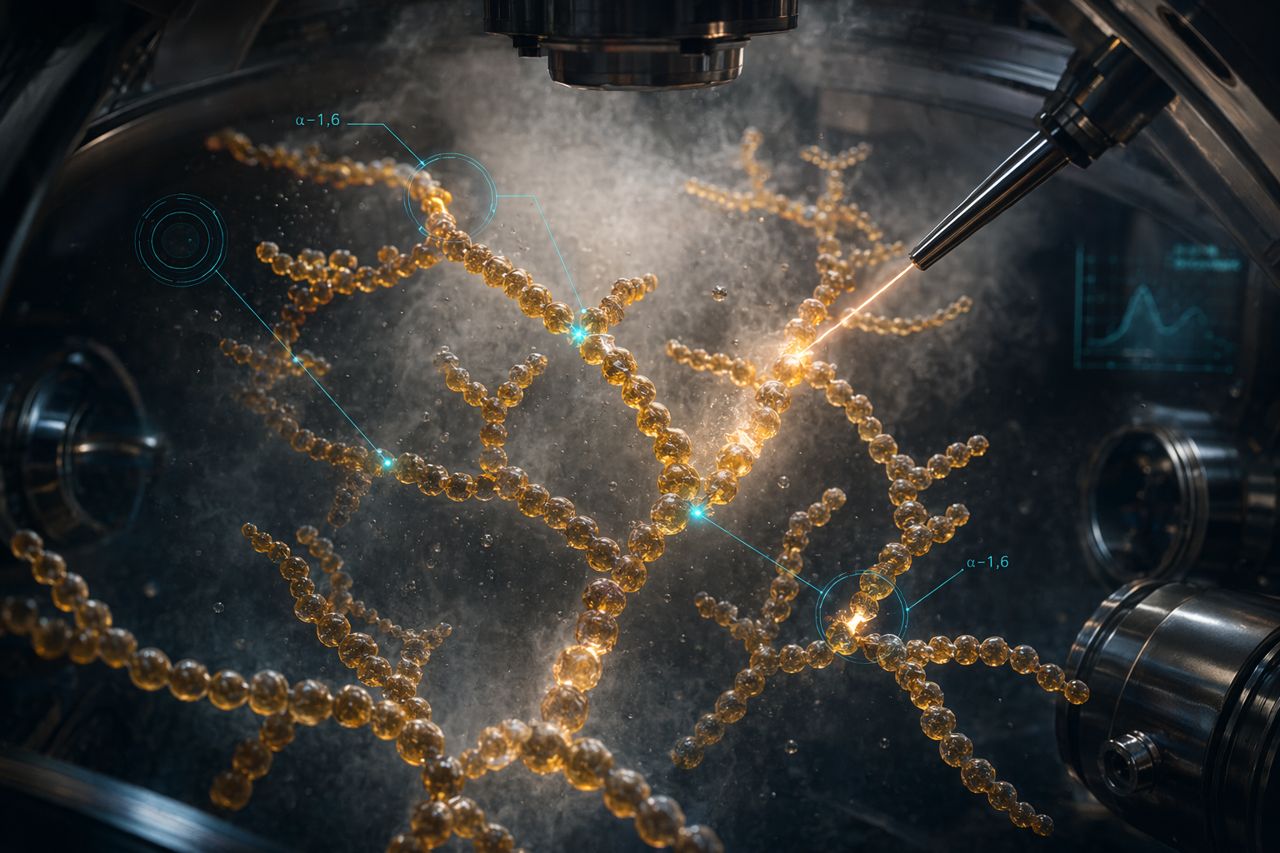
Request pricingPullulanase is used when starch conversion is limited by branch structure, not just chain length. In saccharification workflows, Pullulanase (Pullulan 6-alpha-glucanohydrolase) hydrolyzes α-1,6 linkages in pullulan, amylopectin, and branched dextrins. The result is a more accessible substrate pool for glucoamylase, beta-amylase, maltogenic enzymes, and fermentation organisms.
For starch syrup plants, breweries, distilleries, and fermentation facilities, the commercial question is direct: how much fermentable or target carbohydrate is still locked inside branched dextrin? Pullulanase is the enzyme used to release that value with controlled debranching.
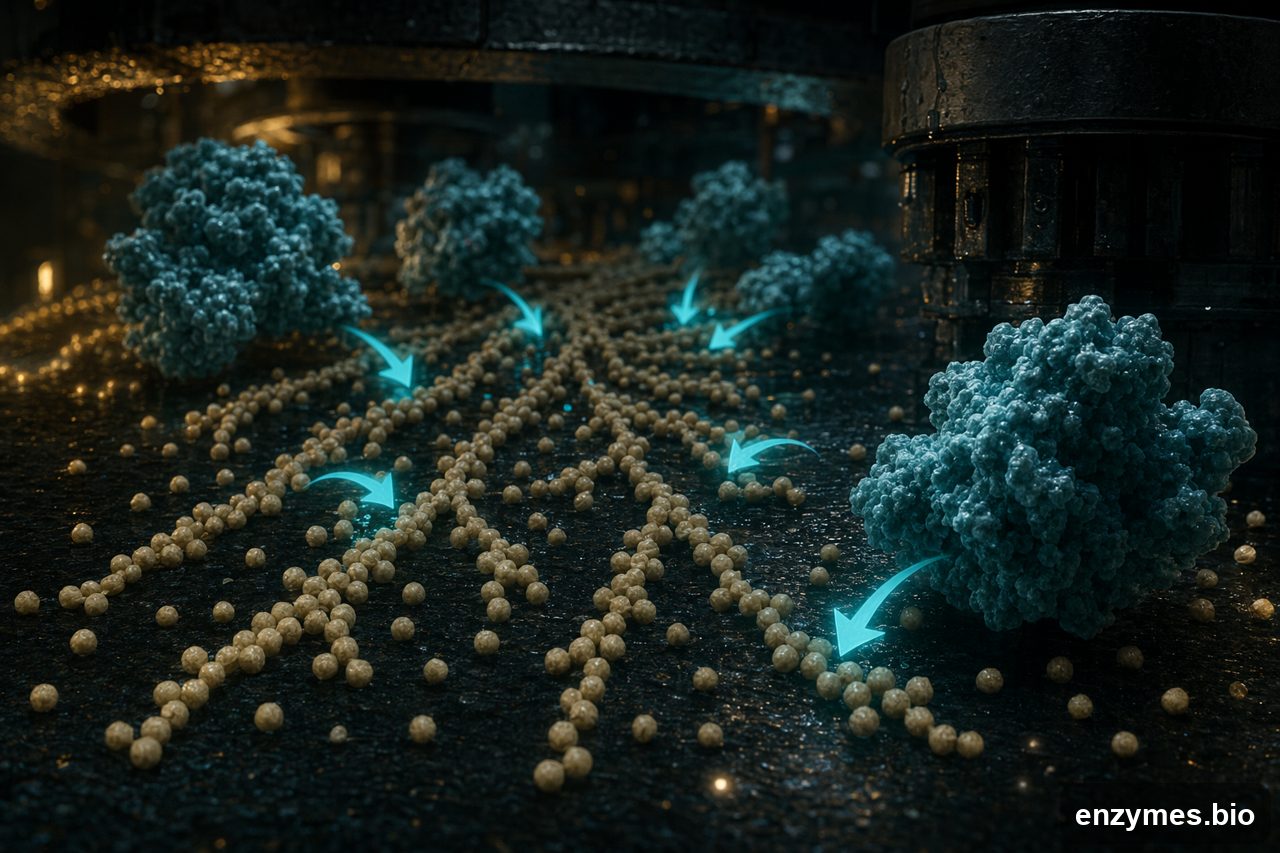
A typical starch conversion flow includes:
Alpha-amylase mainly attacks α-1,4 linkages. It reduces viscosity and creates shorter dextrins, but it does not fully resolve α-1,6 branch points. Those branch points form limit dextrins that slow complete conversion and can remain as residual carbohydrate.
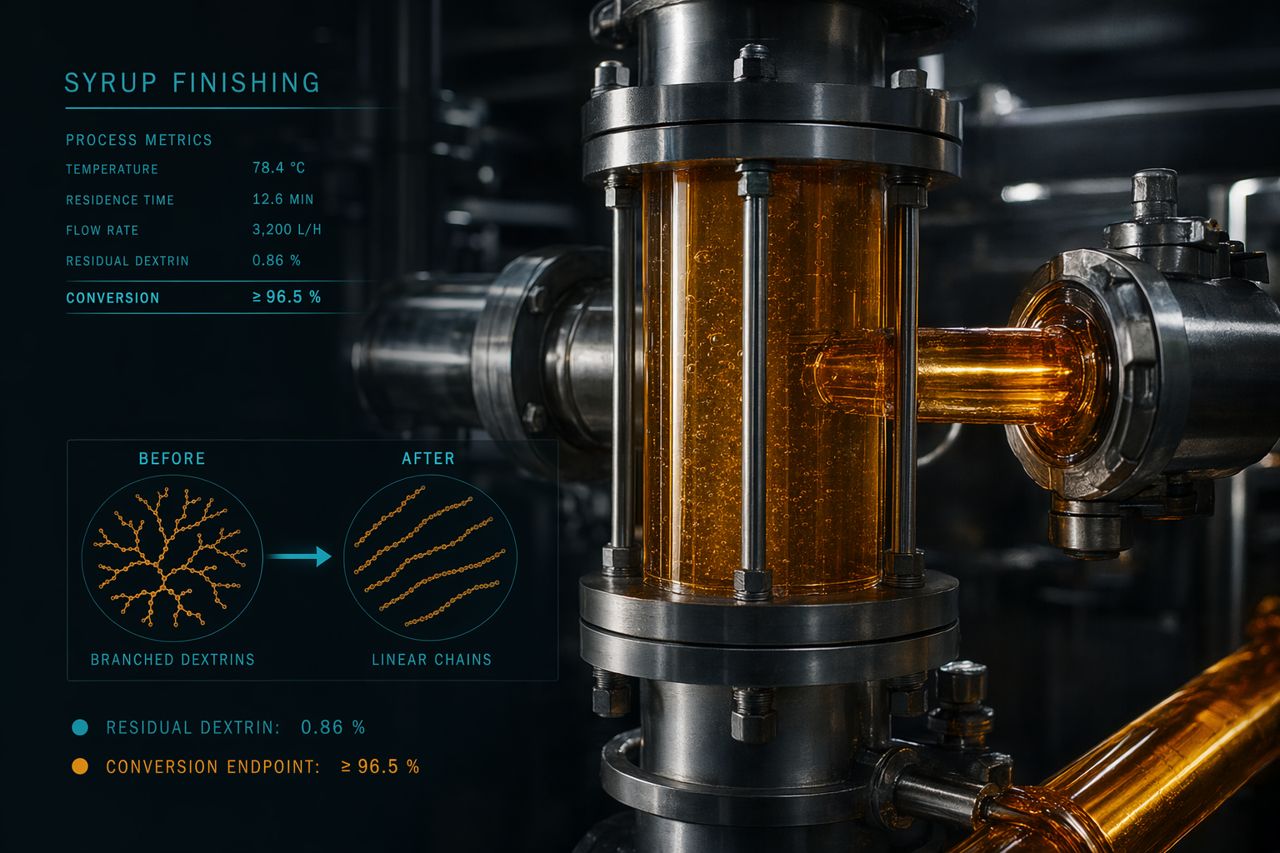
Pullulanase addresses that bottleneck by opening the branch architecture. Once branches are removed, companion enzymes have better access to linear chains and more productive chain ends.
In industrial saccharification, the benefit is measured through process outcomes, not enzyme theory.
By removing α-1,6 branch points, pullulanase can improve the accessibility of amylopectin-derived dextrins. This supports higher conversion toward the chosen endpoint, whether the target is high-glucose syrup, high-maltose syrup, fermentable wort, or a defined carbohydrate spectrum.
Branched dextrins are common contributors to incomplete conversion. Debranching reduces the structural barriers that leave non-target carbohydrates in the stream.
Glucoamylase and maltogenic systems often perform more effectively when branch density has been reduced. Pullulanase does not replace those enzymes; it makes their substrate more accessible.
Cleaner saccharification can support lower residual complexity, improved process consistency, and fewer surprises during clarification, filtration, evaporation, or fermentation.
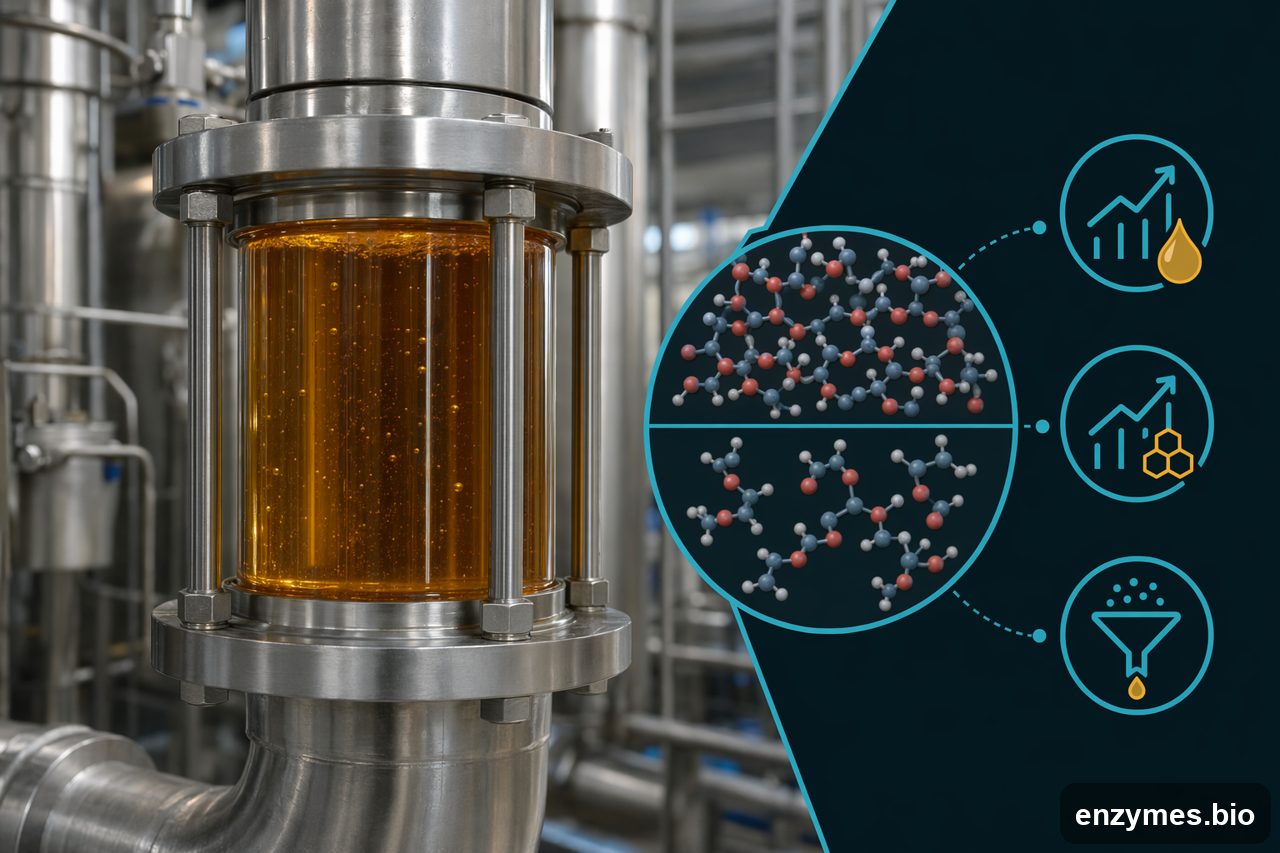
Pullulanase is commonly paired with glucoamylase after liquefaction. The objective is to reduce branched dextrins and support a more complete conversion toward glucose-rich syrup.
Key evaluation points:
When the target is not maximum glucose, pullulanase still has value. Controlled debranching can make amylopectin-derived material more available to beta-amylase or maltogenic systems, supporting a defined maltose-rich or maltotriose-containing profile.
Key evaluation points:
In brewing and distilling, pullulanase can help reduce unfermentable branched dextrins and support deeper attenuation. The value is strongest where starch utilization, alcohol yield, or carbohydrate profile control is constrained by residual dextrin structure.
Key evaluation points:
For fermentation teams, the commercial objective is feedstock consistency. Pullulanase can help convert branched starch-derived carbohydrates into a more predictable fermentable substrate, supporting tighter performance from downstream organisms.
Key evaluation points:

Pullulanase is not a generic add-on. It should be positioned around the process constraints that create residual branched carbohydrate.
Corn, wheat, cassava, potato, rice, and mixed starch streams have different amylose-to-amylopectin ratios, gelatinization behavior, and branch-density patterns. A dosage strategy that works on one substrate may not translate directly to another.
Poor liquefaction can limit saccharification regardless of debranching. Pullulanase performs best when starch has been properly opened and reduced to a substrate range that companion enzymes can process.
Pullulanase must operate inside the practical window of the saccharification step. Selection should consider the operating pH, temperature profile, residence time, and compatibility with glucoamylase, beta-amylase, or maltogenic enzymes.
The goal may be high glucose, high maltose, deeper fermentability, or a precise balance of glucose, maltose, maltotriose, and dextrins. Pullulanase strategy changes depending on the endpoint.
Batch, fed-batch, and continuous systems all handle debranching differently. Contact time, mixing, solids level, and process hold points should be evaluated before scale-up.
Use this sequence when evaluating pullulanase in a saccharification line:
Pullulanase is most valuable when paired intentionally.
The correct pairing depends on product specification, process temperature, pH, starch source, and residence-time economics.
When sourcing pullulanase for saccharification, request information that connects directly to plant operation:
Avoid selecting purely on label claims. The right pullulanase is the one that improves your target process metrics under your actual operating conditions.
To get useful pricing and application guidance, provide:
Pullulanase improves saccharification when α-1,6 branch points are limiting conversion. Used correctly, it can help unlock branched dextrins, improve companion-enzyme performance, tighten carbohydrate profiles, and support higher-value starch utilization. The strongest results come from matching the enzyme to the substrate, process window, and commercial endpoint.
Tell us your application and volume — we reply with pricing and lead time.