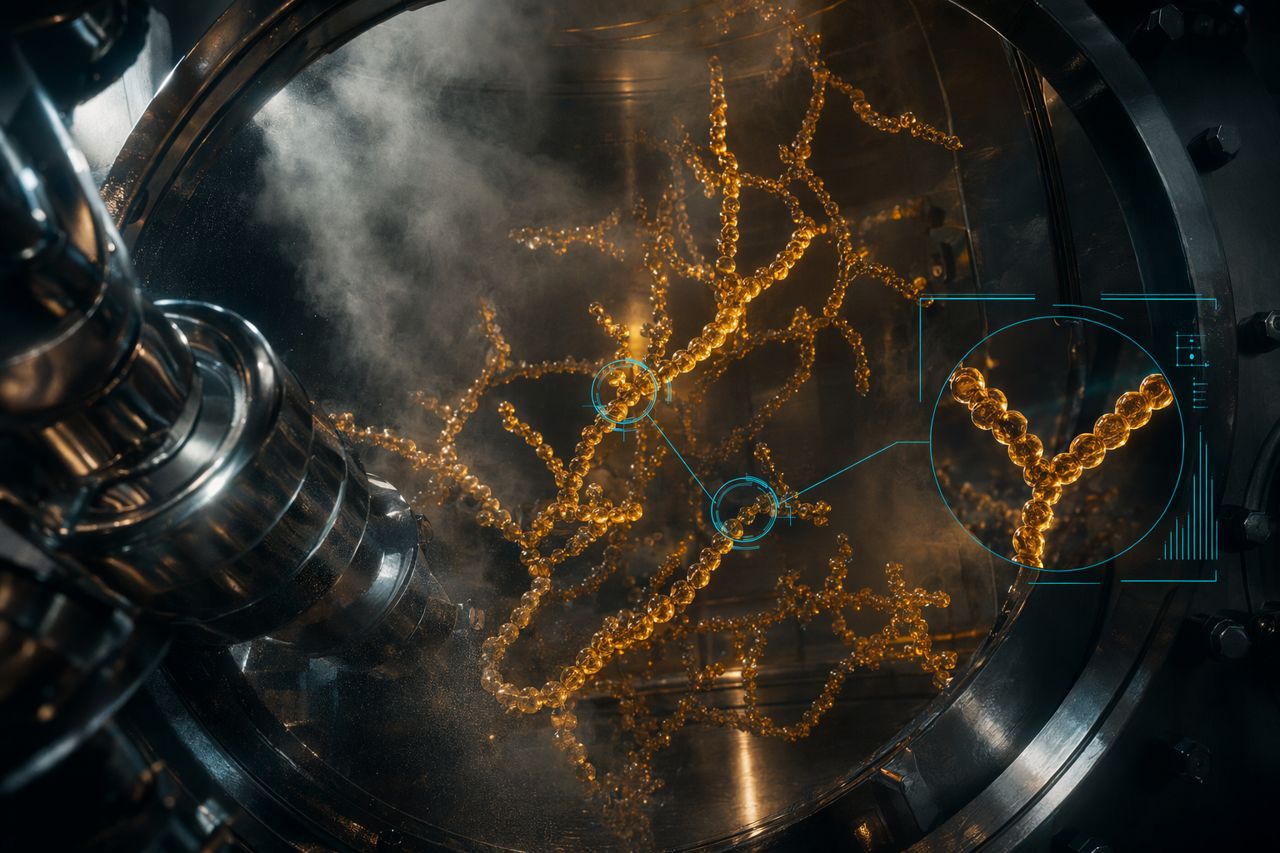
A technical guide to how pullulanase breaks alpha-1,6 starch branch points, improves saccharification, and supports higher-yield syrup, brewing, and fermentation processes.
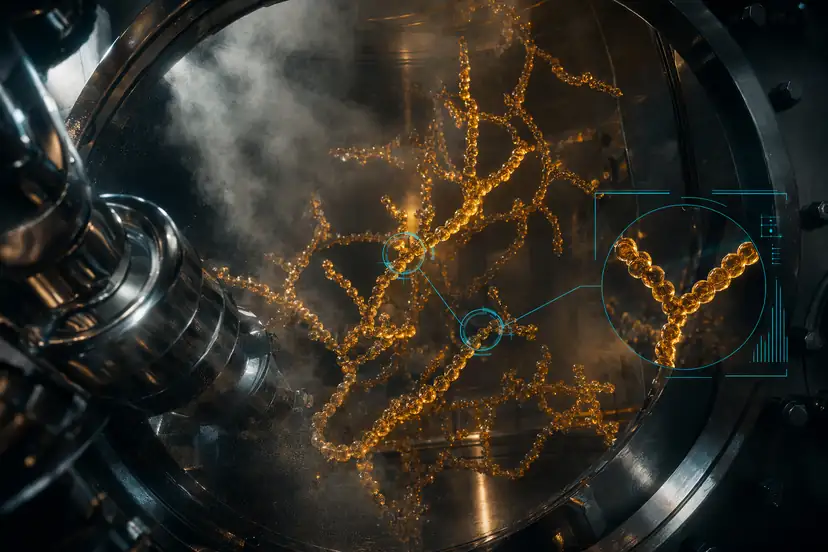
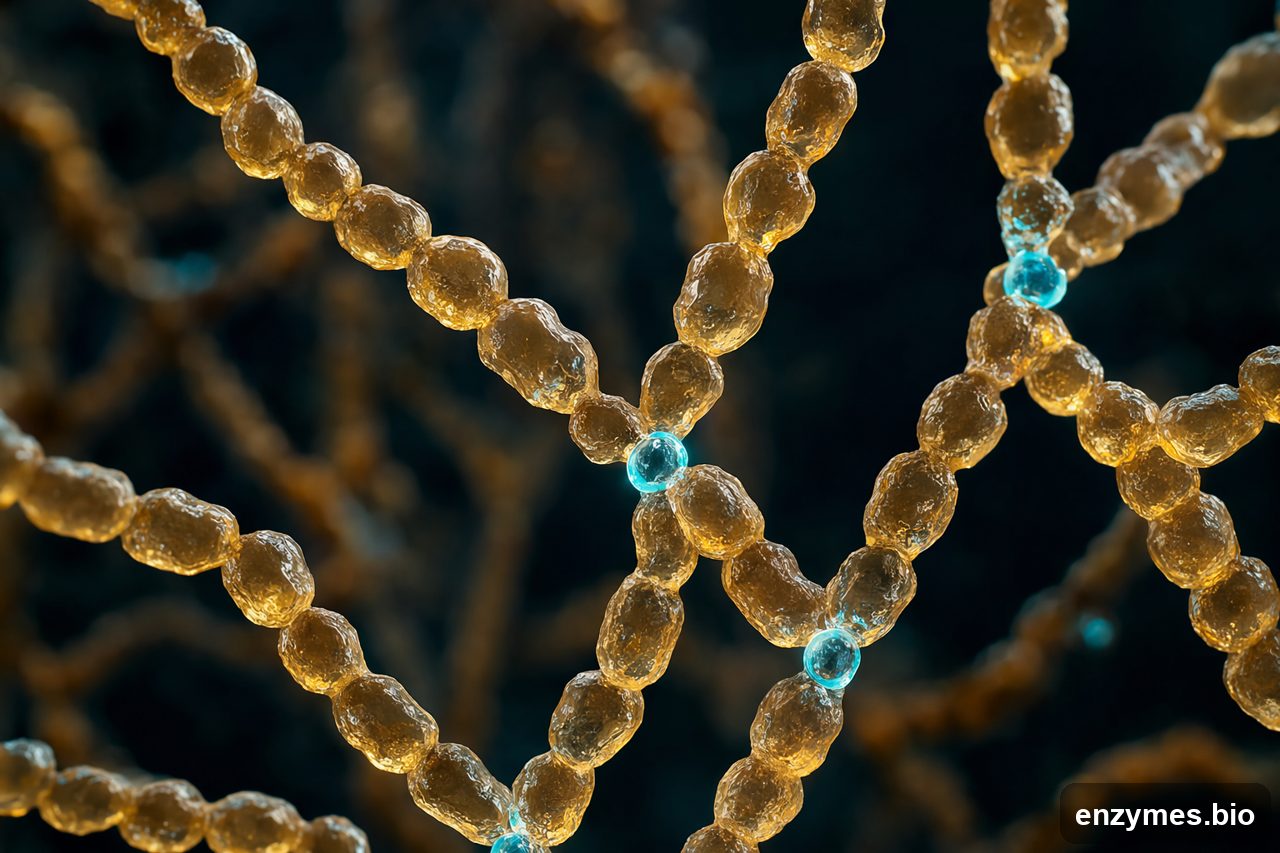
Pullulanase is a debranching enzyme used to open the architecture of starch. Where alpha-amylase reduces viscosity by cutting internal alpha-1,4 glucosidic bonds, pullulanase targets the alpha-1,6 branch points found in amylopectin and related branched dextrins.
That distinction matters commercially. Branch points create structural resistance during hydrolysis. They slow conversion, leave residual limit dextrins, and can hold back fermentable sugar yield. Pullulanase removes those obstacles by converting branched starch fragments into more linear substrates that downstream enzymes can finish more efficiently.
For starch processors, brewers, distillers, and formulation teams, pullulanase is not simply an additive enzyme. It is a conversion-control tool.
The starch structure pullulanase is built to solve
Native starch is mainly composed of two glucose polymers:
Amylose — mostly linear chains built through alpha-1,4 bonds.
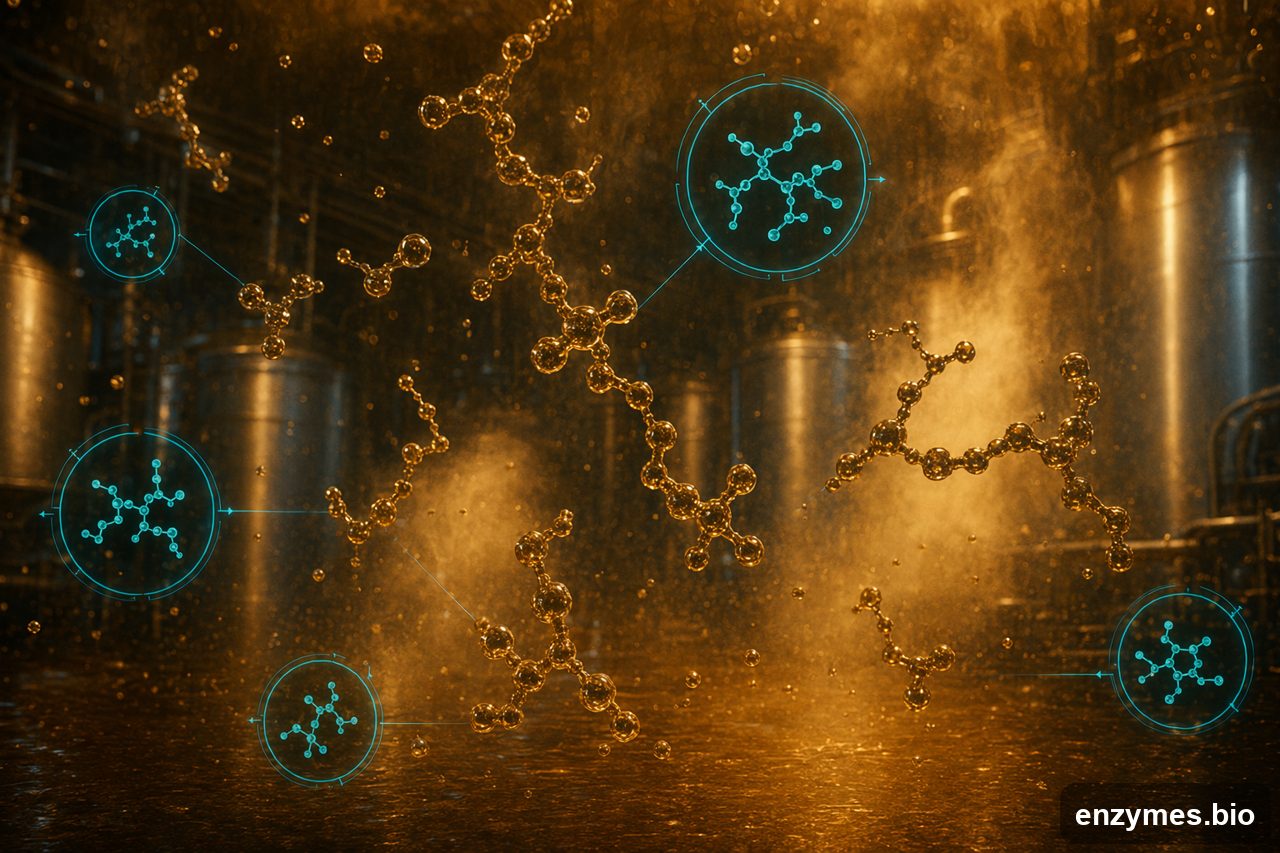
During liquefaction and saccharification, alpha-1,4 bonds are rapidly attacked by common starch hydrolysis enzymes. The alpha-1,6 junctions remain more difficult. These branch points generate limit dextrins: partially hydrolyzed, branched carbohydrate fragments that resist full conversion.
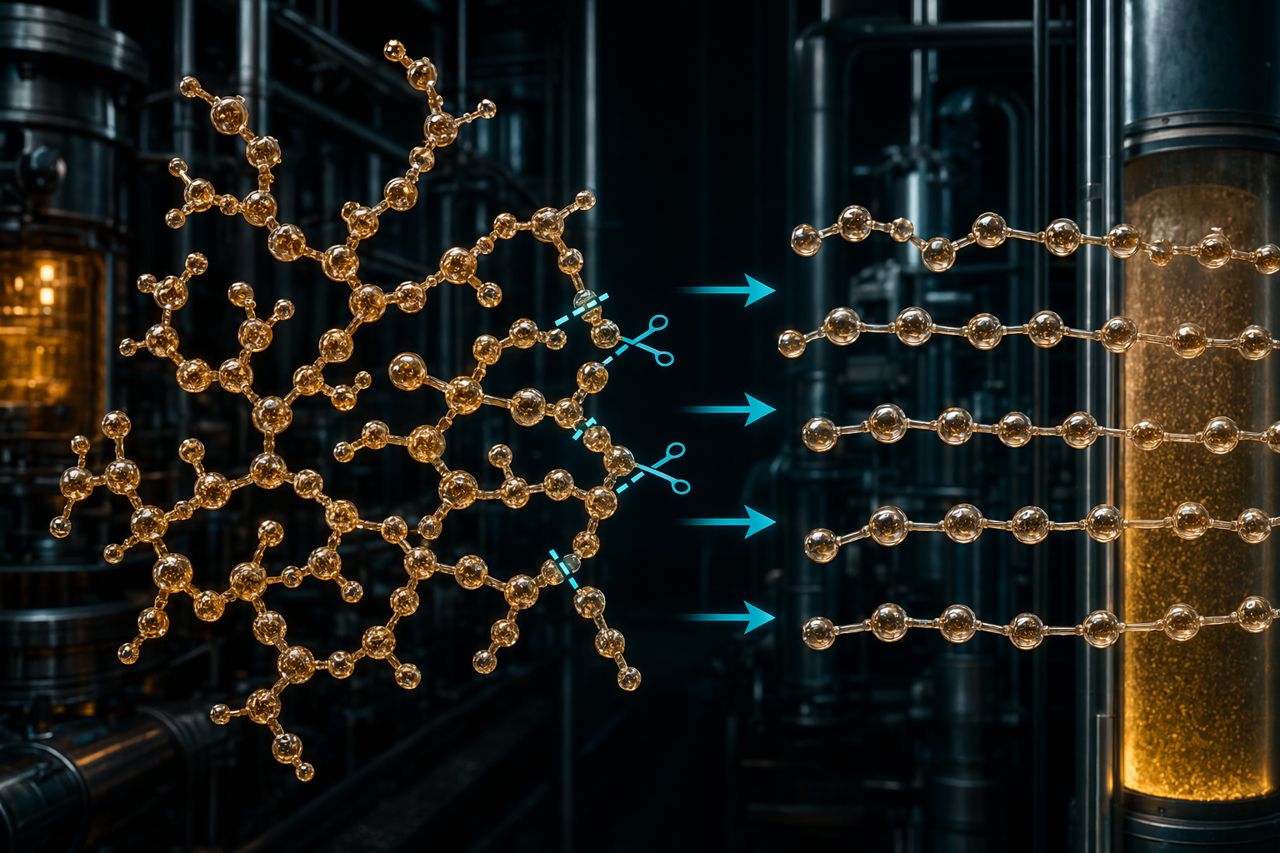
Pullulanase addresses the remaining structure directly. It hydrolyzes alpha-1,6 linkages, releasing side chains and simplifying the dextrin profile.
What “debranching” means in process terms
Debranching is the controlled removal of branch points from starch-derived substrates. In a production environment, this can support:
Higher fermentable sugar release from the same starch input
Lower residual dextrin in saccharified streams
More complete substrate utilization during fermentation
Better filtration and clarification behavior
Reduced viscosity in later process stages
More predictable glucose or maltose profile development, depending on the enzyme system used
The key mechanism is structural access. Once pullulanase opens branch points, other enzymes can act on longer, cleaner linear chains instead of stopping near branched junctions.
Pullulanase mechanism: where it cuts and why it improves conversion
Pullulanase, properly named Pullulanase (Pullulan 6-alpha-glucanohydrolase), catalyzes hydrolysis of alpha-1,6 glucosidic bonds in pullulan, amylopectin-derived dextrins, and related branched substrates.
In practical starch conversion, the mechanism can be summarized in three stages:
Branched dextrins are generated during liquefaction and early saccharification.
Pullulanase recognizes alpha-1,6 junctions and cleaves the branch linkage.
Linear chains become available for glucoamylase, beta-amylase, maltogenic enzymes, or other conversion enzymes depending on the desired product profile.
This is why pullulanase is frequently used in combination rather than alone. Its value is strongest when paired with enzymes that convert the newly released linear chains into target sugars.
Pullulanase with glucoamylase: higher dextrose and cleaner saccharification
In glucose syrup and fermentation feedstock production, pullulanase is often paired with glucoamylase. Glucoamylase removes glucose from non-reducing ends, but branch points slow its progress. Pullulanase increases the number of accessible linear segments and reduces the burden of branched limit dextrins.
The result is a more efficient saccharification environment:
Higher dextrose potential from the same liquefied starch
Lower unconverted dextrin load
Improved fermentation substrate consistency
Better raw material utilization
Potential to optimize the overall enzyme system around conversion target, residence time, and plant constraints
For distillers and bio-based fermentation producers, this can translate into stronger conversion economics: more fermentable carbohydrate delivered to yeast or microbes, with less starch value trapped in residual dextrin.
Pullulanase in maltose and high-maltose syrup production
Pullulanase can also support maltose-rich profiles when used with beta-amylase or maltogenic systems. Beta-amylase works from non-reducing ends and releases maltose, but it cannot pass alpha-1,6 branch points efficiently. Pullulanase removes those blocks and allows more complete maltose development.
In this context, pullulanase helps processors improve:
Maltose yield
Syrup fermentability profile
Dextrin control
Batch-to-batch carbohydrate distribution
Downstream handling and clarification
The commercial question is not only “does it debranch?” but “does it debranch at the right point in the process for the desired sugar spectrum?” Debranch Works evaluates pullulanase around the intended product profile, not as a generic starch enzyme.
Brewing and distilling relevance
Brewers and distillers use debranching logic to improve starch utilization and fermentability where branched dextrins limit yield. Pullulanase can help create a more fermentable wort or mash-derived stream when aligned with the rest of the enzyme program.
Typical goals include:
Increasing fermentable extract
Reducing residual dextrin where a drier profile is desired
Supporting consistent attenuation
Improving raw material flexibility
Enhancing starch-to-alcohol conversion efficiency
Pullulanase should be specified with attention to mash composition, cereal source, process pH, thermal exposure, residence time, and the companion enzymes already in use.
Where pullulanase fits in a starch process
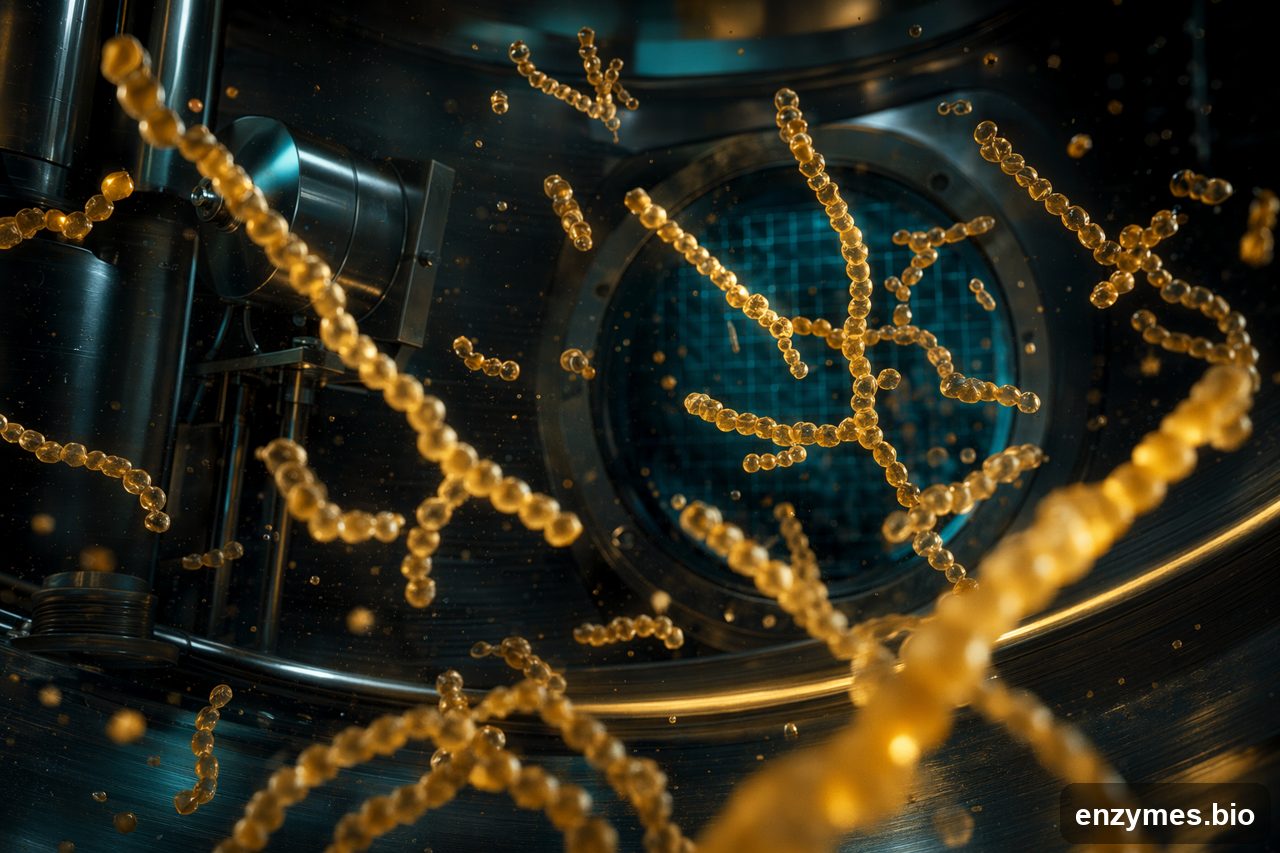
Pullulanase is usually deployed after starch has been gelatinized and liquefied enough to expose branched dextrins. It can be introduced during saccharification or in a controlled conversion step depending on the process design.
Common integration points
After liquefaction: to attack branched dextrins generated by alpha-amylase.
During saccharification: to work alongside glucoamylase or maltose-generating enzymes.
Before fermentation: to raise fermentable sugar availability and reduce unconverted carbohydrate.
In syrup profile control: to tune dextrose, maltose, or residual dextrin targets.
Correct integration depends on substrate solids, starch source, existing enzyme package, residence time, and finished product requirements.
What buyers should specify when sourcing pullulanase
A practical pullulanase conversation should focus on application fit, not just catalog identity. Useful sourcing details include:
Regulatory and documentation requirements for the destination market
This information allows a more accurate recommendation on enzyme format, compatibility, and implementation strategy.
Commercial benefits of controlled debranching
Pullulanase is valuable because it turns molecular access into process performance. When matched correctly to the process, it can help manufacturers improve:
Yield: more usable sugar from the same starch input.
Conversion completeness: fewer branched dextrins left behind.
Fermentation efficiency: better availability of fermentable carbohydrate.
Syrup quality: cleaner carbohydrate profiles and improved clarity potential.
Process stability: more predictable performance across starch lots.
Cost control: stronger value extraction from raw material and enzyme systems.
The strongest pullulanase programs are built around the economic target: dextrose yield, maltose profile, alcohol yield, cycle time, filtration behavior, or raw material flexibility.
Pullulanase is not a substitute for process design
Debranching improves access, but it does not replace upstream gelatinization, liquefaction quality, pH control, residence time management, or downstream enzyme selection. Pullulanase performs best when the starch matrix is properly opened and the process gives the enzyme enough access to branch points.
Common reasons for underperformance include:
Incomplete starch gelatinization
Liquefaction that leaves substrate poorly exposed
Addition at a stage with excessive thermal or pH stress
Misalignment with companion enzymes
Unrealistic sugar profile targets for the process window
Insufficient mixing or contact with the substrate
A good pullulanase specification begins with the process map.
Request pricing or technical fit guidance
If you are evaluating pullulanase for starch processing, brewing, distilling, syrup production, or fermentation feedstock, Debranch Works can help align enzyme format and implementation with your conversion target.
A technical reply is strongest when it includes substrate source, target product, current enzyme program, and the process stage where debranching is being considered.