Debranch Works
Buying Pullulanase Online: Industrial Sourcing Guide
What starch processors, brewers, distillers, and formulation teams should verify before buying pullulanase online: fit, documents, storage, support, and pricing.
Request pricing What starch processors, brewers, distillers, and formulation teams should verify before buying pullulanase online: fit, documents, storage, support, and pricing.
Request pricingPullulanase is not a generic catalog add-on. For industrial users, the value of Pullulanase (Pullulan 6-alpha-glucanohydrolase) depends on how reliably it debranches starch-derived substrates under your process conditions.
Used correctly, pullulanase cleaves alpha-1,6 branch points in amylopectin and related dextrins. That can improve starch conversion, increase fermentable sugar availability, support cleaner syrup profiles, reduce residual dextrin, and help process teams hit tighter yield and consistency targets.

Buying pullulanase online is convenient. Buying the wrong pullulanase online is expensive.
This guide is written for formulation scientists, starch processors, brewers, distillers, toll manufacturers, and procurement teams evaluating a commercial supply decision.
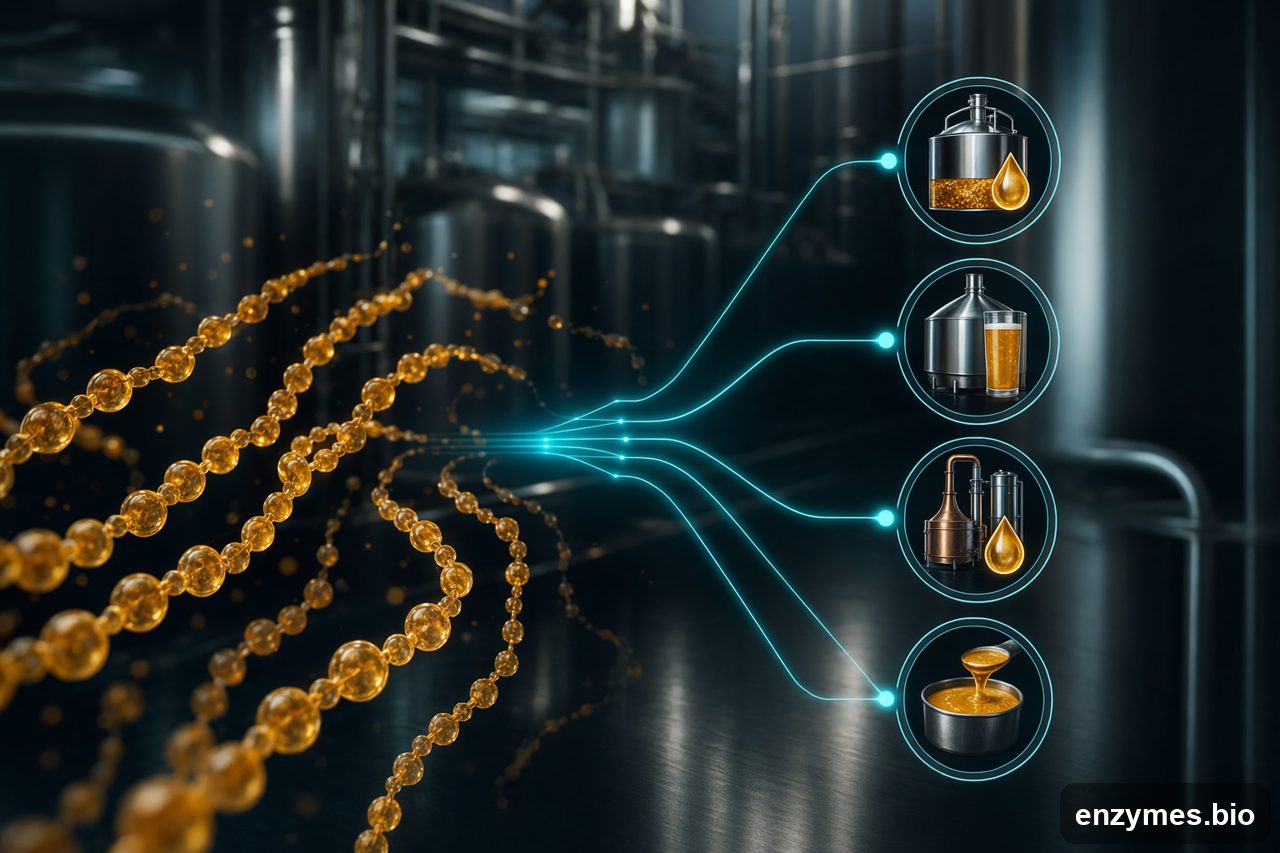
Pullulanase is a debranching enzyme. Its commercial role is to make branched starch structures more accessible to companion enzymes and downstream processing steps.
In practice, that means it can support:
Pullulanase is often used alongside alpha-amylase, glucoamylase, beta-amylase, or other carbohydrate-processing enzymes. The commercial question is not simply whether it works. The question is whether it works in your substrate, temperature window, pH range, residence time, and finished-product requirements.
Online listings can make enzymes look interchangeable. They are not.
Before placing a purchase order, industrial buyers should confirm:
A low online price is not useful if the material cannot be validated, shipped consistently, or supported during scale-up.
Procurement should not source pullulanase in isolation. Start with the process target.
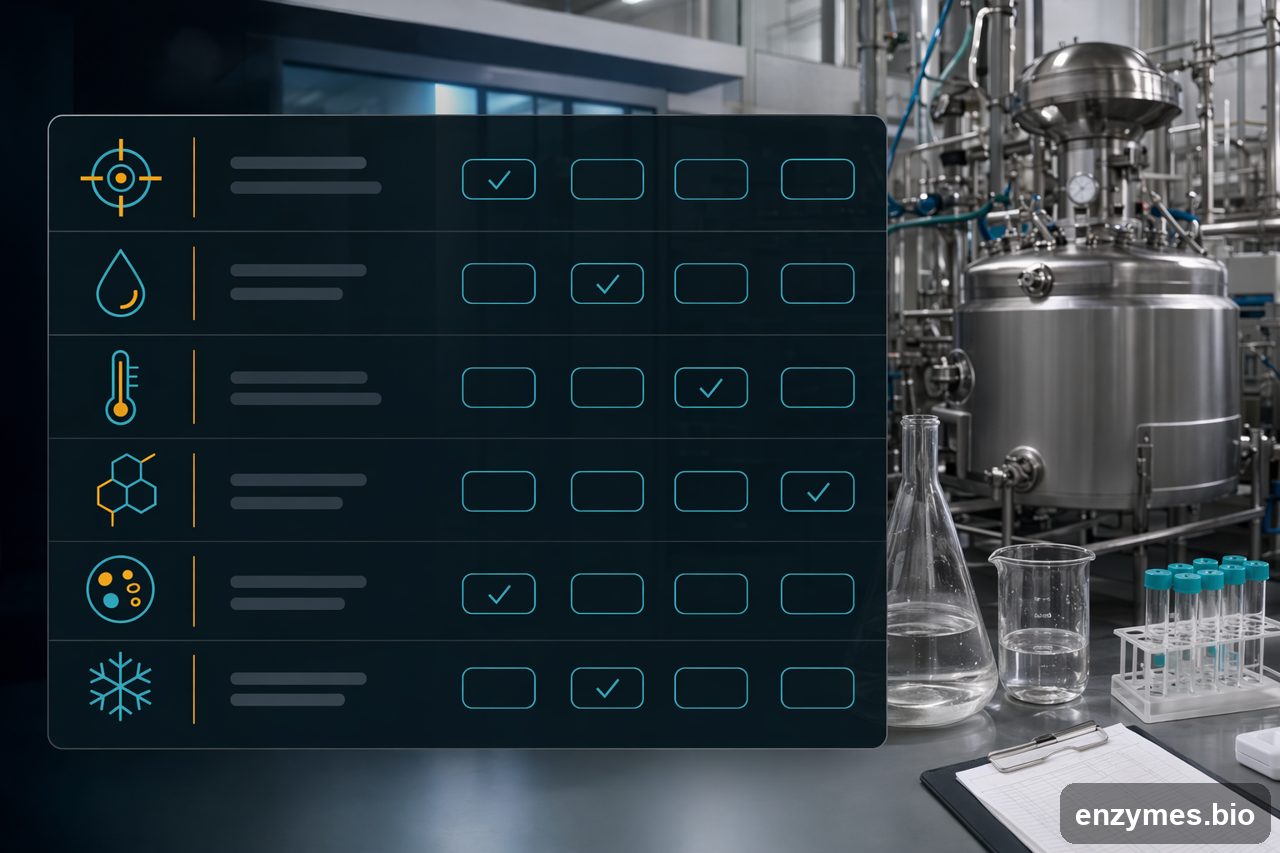
Useful targets include:
When the target is measurable, the enzyme selection becomes sharper. Debranch Works can help translate those targets into a trial plan without exposing confidential plant data.
Pullulanase performance is shaped by temperature, pH, substrate concentration, companion enzymes, calcium or salts, residence time, and thermal exposure.
Ask whether the material is appropriate for:
A pullulanase that performs well in one syrup line may not be the best fit for a brewery mash, distillery cook, or specialty starch application.
For B2B purchasing, documentation is part of the product.
Request the available document set before ordering:
If your quality team needs a specific declaration, request it before shipment rather than after receiving material.
A credible pullulanase supplier should be able to support lab, pilot, and production trials.
A practical trial should define:
Do not rely on a single bench result. Pullulanase performance should be judged against your production economics: raw material utilization, processing time, downstream load, fermentation performance, and final product consistency.
Both liquid and powder formats can be commercially useful. The right choice depends on how your plant handles enzymes.
Confirm storage, shelf life, packaging, and handling requirements for the specific material being quoted.
Pullulanase pricing is usually shaped by more than pack size.
Commercial quote factors include:
For meaningful pricing, provide your intended application, estimated monthly or quarterly volume, destination region, preferred format, and required documents. If you are still screening options, request a sample or trial quantity with technical guidance.
Be cautious if an online supplier cannot provide basic B2B support.
Common red flags include:
Industrial pullulanase should be purchased as a process input, not as an anonymous commodity.
To get a useful quote quickly, include:
You do not need to disclose proprietary recipes or confidential operating parameters in the first message. Share enough context for a technically appropriate recommendation and quote.
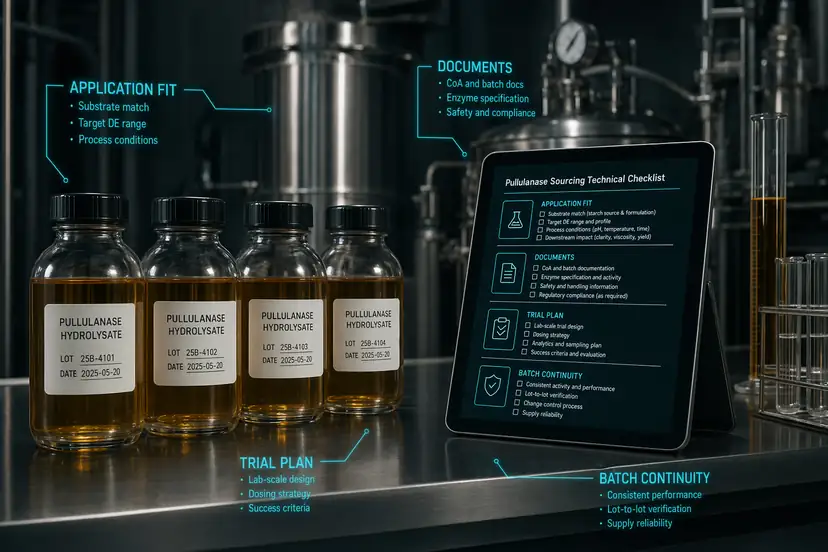
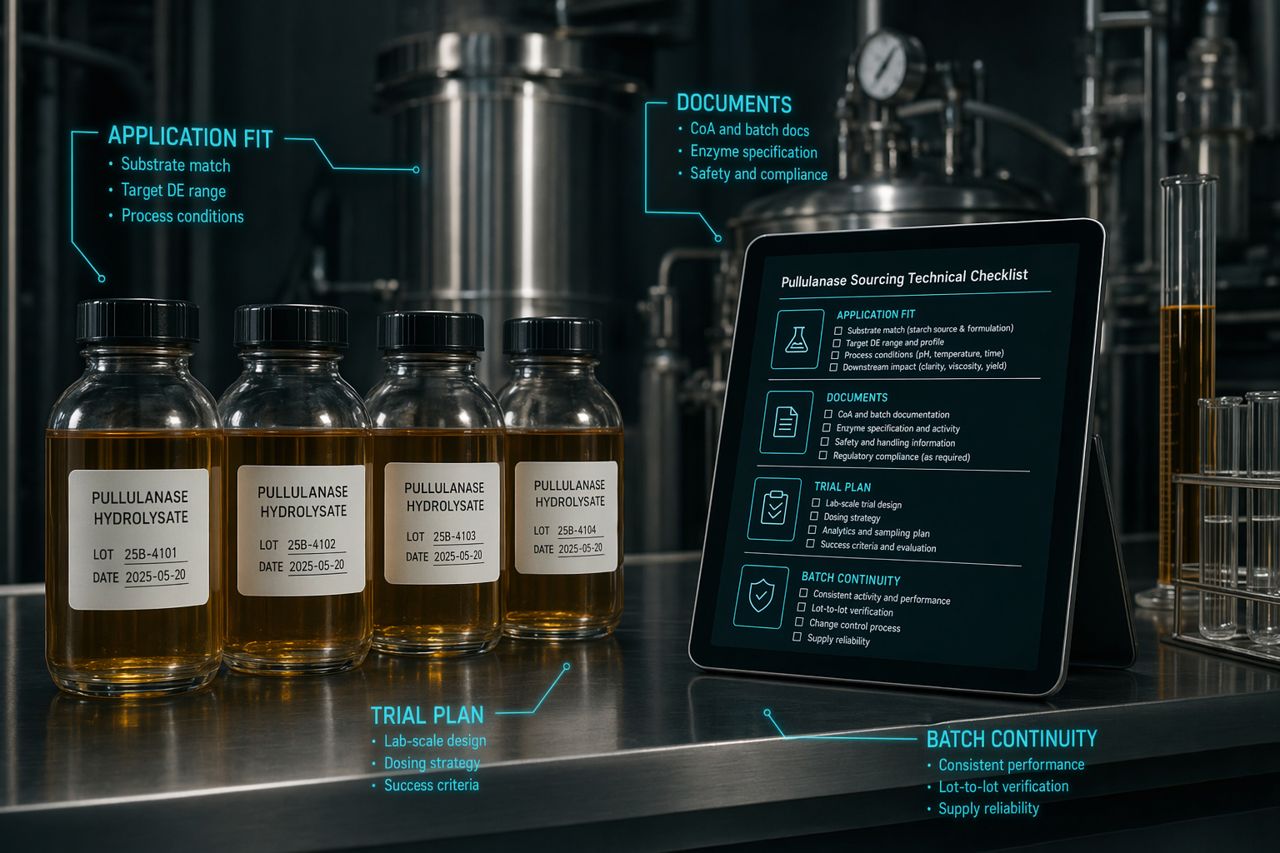
Use this checklist before issuing a purchase order:
Debranch Works supplies commercial pullulanase guidance for industrial users who need technical fit, documentation, and supply clarity before purchasing.
Use the form below to request pricing, trial support, or a document review. A technical commercial contact will respond with the next step.
Buying pullulanase online should not mean giving up technical control. The right pullulanase choice links enzyme identity, process conditions, documentation, logistics, and measurable plant outcomes.
If your goal is better debranching, cleaner conversion, and a more predictable commercial process, source pullulanase with the same discipline you apply to every critical production input.

Tell us your application and volume — we reply with pricing and lead time.